What we believe

Almost every business problem and almost every sustainability problem is a people problem. Not in a soft sense. In the sense that organisations already hold most of the information they need to fix what is wrong, and it stays unfixed because nobody can see the whole picture, or because the person who can see it cannot get anyone else to move.

Empathy is the skill that closes that gap. Not kindness, and not sympathy. Intelligence about people: your team, your customers, your suppliers, the regulator, and the person who has to sign off the budget. Understanding what is actually going on beneath what is said, and using it to decide.

It is also where AI stops being enough. A model will process your data and find the pattern. It will not read the room, test an assumption nobody wrote down, or notice that two teams are reporting the same number differently. Projects rarely stall on bad analysis. They stall on the human parts: assumptions nobody checked, people already doing the work of three, information that never reached whoever needed it, and resistance that is never said out loud. That is the part somebody still has to do.

We start where you are. We surface what you have not seen yet. We do not pretend that change is easy.

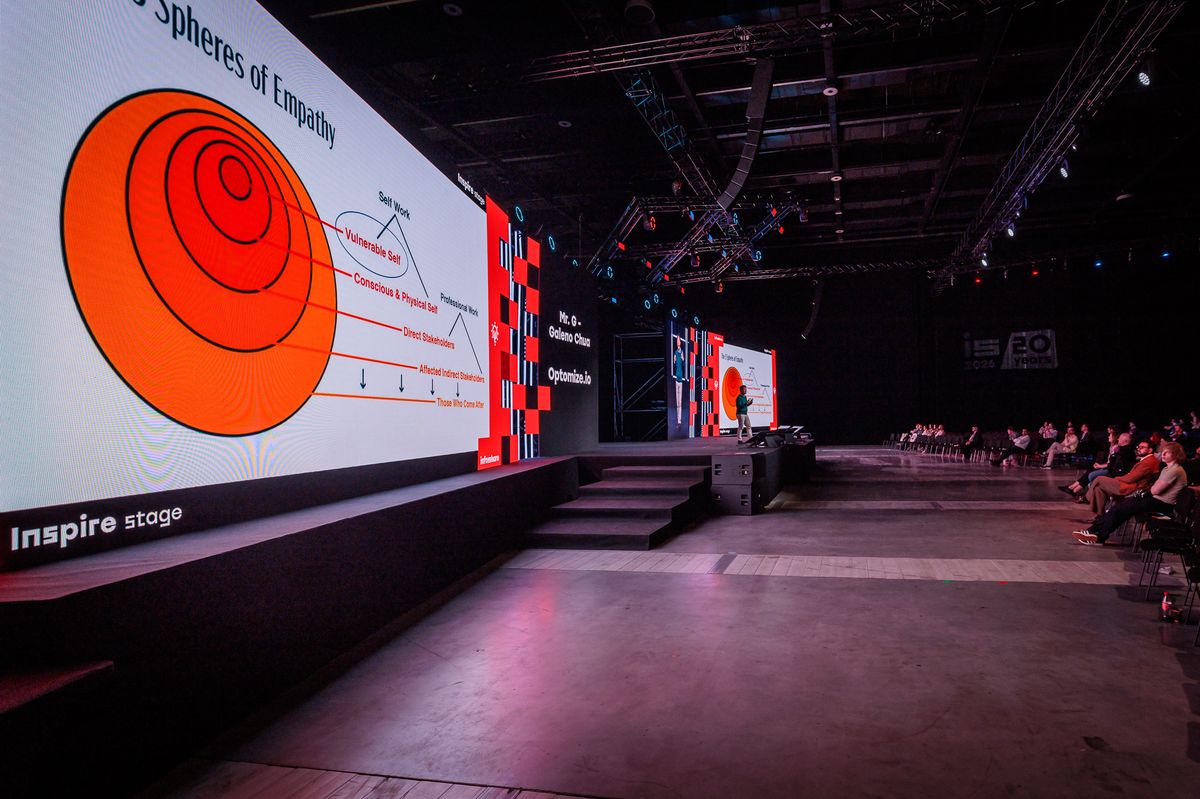
The 5 Spheres of Empathy

Empathy is not something you sprinkle over a business. It is a structure, and it is the method underneath everything we do.

Think of your impact like a stone dropped into a still pond. The stone is you, and the ripples gain scale as they lose visibility. Most leaders get stuck in the first three spheres, because those are the ones in front of them. The consequences that matter most tend to sit in the last two.

  1. The Vulnerable SelfValues and identity, and the gap between what you say you stand for and how you actually behave.
  2. The Conscious SelfCapacity, energy and recovery. Whether you can sustain what you have taken on.
  3. The Direct StakeholderCustomers, teams, partners. What they actually need, rather than what you assume they need.
  4. Affected Indirect StakeholdersSupply chains, communities, second and third-order consequences. The people who carry the cost and are never in the room.
  5. Those Who Come AfterLegacy and long-term design. Whether what you built holds up without you.

Field-tested across more than 300 organisations in eight countries, in sectors from government to manufacturing. The full method, with resources and tools, is at 5spheresofempathy.com, so you can read it before you buy anything.

How we got here

Optomize grew out of The Idea Consultancy and the Business Sustainability First Principles Accelerator. Across fifteen years of coaching, consulting and training, the pattern kept repeating: organisations wanted to do better, and the tools available were too expensive, too slow, or too disconnected from how people actually work.

The other half of the pattern was measurement. Most businesses do not measure their impact, and it is rarely because they do not care. It is that they do not know where to start, it costs money and time they have not budgeted, there are too many moving parts to hold at once, and they suspect that reporting makes them accountable for a standard they have not set yet. So it sits in the too-hard basket, or the not-now one. Meanwhile the first numbers they need are usually already in a power bill.

So we built a way to close both gaps. AI that understands business context, paired with coaching that understands human context. The technology scales. The empathy does not get cheaper, but it does get more accessible.

Founder

Galeno Chua

Galeno Chua, founder of Optomize

Photography: Zuzanna Gerulewicz

Almost every business problem is a people problem. After nearly two decades working with everyone from the UN and Oxfam to more than two hundred startups, part of the 300-plus organisations this has been tested across in ASEAN, Europe and New Zealand, I keep arriving at the same conclusion: it does not matter how smart, experienced or well-resourced you are. What blocks us is each other. And the first person blocking you is usually you.

The 5 Spheres of Empathy is the method I wrote down after fifteen years of watching the same pattern destroy good strategies, good products and good intentions. Empathy, the real kind, is not kindness. It is intelligence about people. Used well, it is the difference between decisions that compound and decisions that fail expensively.

It is also the thread through everything I build. Optomize turns the method into tools leaders work with. HowLegit applies the same discipline to what companies claim about themselves. Different doors, same conviction: trust is built from the inside out.

Galeno is an AI and greentech startup founder and a business coach for startups, working with the New Zealand Government, the United Nations Development Programme in Cambodia, and the Social Tides programme for AI and impact startups across the European Union.

His approach to sustainable business won the Ministry of Science, Technology and Innovation's Green Business Awards, and helped push the sustainable business agenda for organisations including the United Nations and Oxfam to the Royal Government of Cambodia. He is the author of The 5 Spheres of Empathy Field Guide.

He founded Just Good Refills, the first electric-powered refillery in Phnom Penh, supplying telcos, gyms and hotels with naturally made refillable cleaning liquids and keeping thousands of imported single-use plastic containers out of landfill. He also founded Slaprea Food Festivals, which brought more than 200,000 people together over three days and ran live social experiments on waste and hygiene at that scale. Before Optomize he founded The Idea Consultancy and the Business Sustainability First Principles Accelerator.

He holds that empathy, good design and tech-fluency are core life skills for personal and professional success, and is working on real-world problems through empathy, entrepreneurship and principled leadership. The method is at 5spheresofempathy.com.

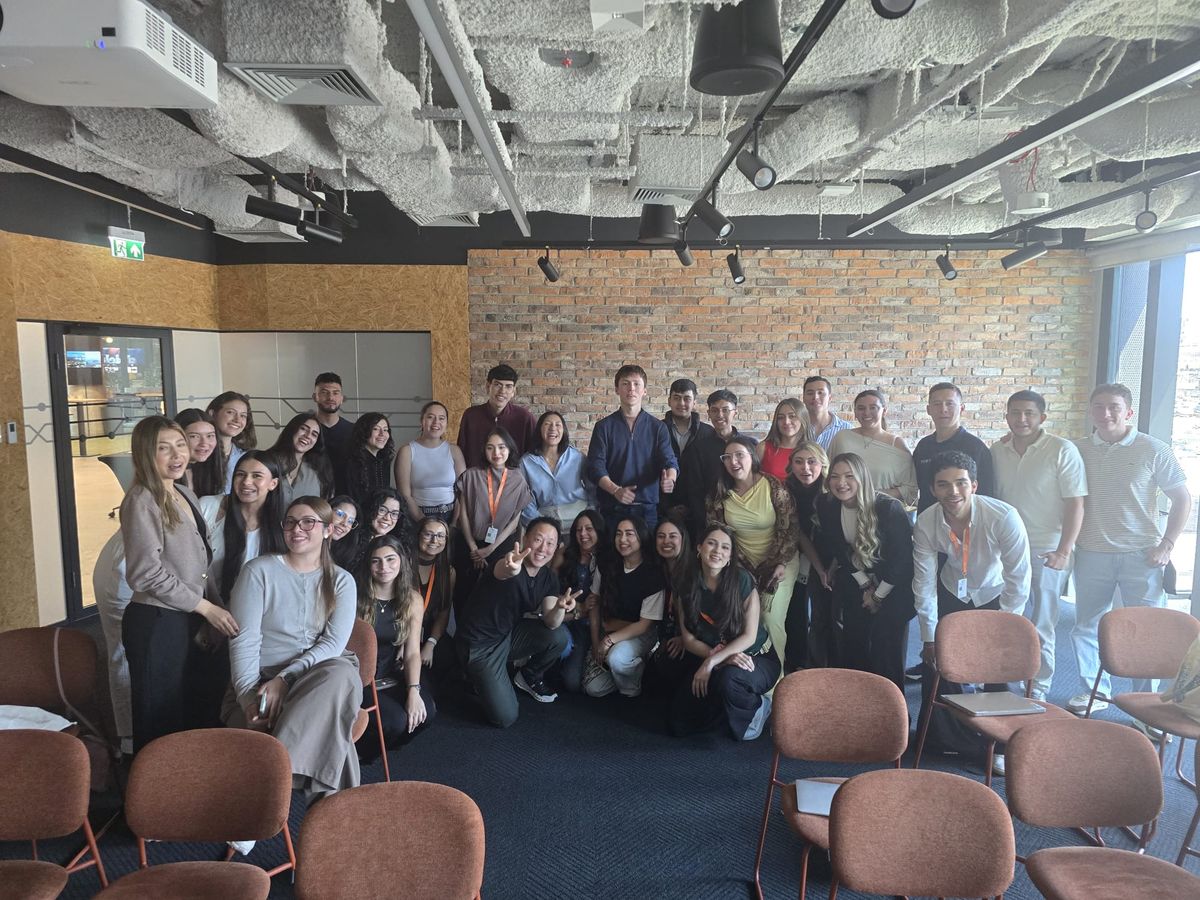
Galeno Chua facilitating a working session at the ASEAN Startup Connect Summit in Phnom Penh, December 2025
ASEAN Startup Connect Summit, Phnom Penh, December 2025
Universidad de La Sabana delegation from Colombia, Warsaw 2026
Universidad de La Sabana delegation, Warsaw 2026
Galeno Chua speaking on the main stage at Infoshare
Infoshare, main stage

The team

Who does the work

Marika Vallier

Marika Vallier

Analyst

Marika has spent her career inside the gap between what organisations say and what they actually do. She led Talent Development and HR at an Australian startup bringing clean, affordable electricity to last-mile communities across Cambodia, the Philippines and Nigeria. She learned, at close range, what it looks like when a company's values are real, and what it looks like when they are not.

That experience did not make her cynical. It made her precise. She is a certified coach with CCI.

LinkedIn

Marika works across both Optomize and HowLegit at present, which is normal at our size and worth stating rather than leaving for someone to notice. Grading sits with HowLegit and is independent of any commercial engagement here. As the team grows, the two roles separate.

How we work with each other

Three values, with the context attached

A single word on a poster is not a value. Without context nobody can act on it, and the gap between what a leader means and what a team hears is where a surprising amount of bureaucratic sludge comes from. So ours carry their interpretation.

Communicate clearly

Clear is kind, unclear is unkind.

Being clear, honest and intentional is a form of kindness at every level of interaction. Communicating hard things, bad news or an honest view, lets people make their own decisions on real information rather than on a well-washed white lie.

Do it on time

You can't move Christmas.

The test of a manager is that the deliverable is good and it is on time. If it is late, we have failed. Where a delay is genuinely unavoidable, we say so early and clearly.

We operate as a team. We care like a family.

Commit freely.

Everyone here chose to be here, and is still choosing it every day. That ties our ambitions to our ability to perform as one. Knowing your team cares about your goals as much as you do makes everything lighter.

What we are testing

Around ten enterprise-level trials running across six sectors. We would rather say what is genuinely in flight than round it up.

Public policy and governance
Telecommunication
Humanitarian and development aid
Venue and event management
Manufacturing
Software

Independent check

We are the technology partner to HowLegit, a partner not-for-profit that grades public claims against evidence. It operates in incubation with the Twoj Startup foundation. HowLegit checks what holds up. Optomize helps you close the gaps.

Platform built by Optomize, HowLegit's technology partner. Optomize and HowLegit share a founder; grades answer only to evidence.

Want to work with us?

Whether you are a leader navigating change, a consultant looking for better tools, or an organisation ready to see how it actually works, we would like to hear from you.

Talk to a Strategist